







Search Results for: Mekong Delta
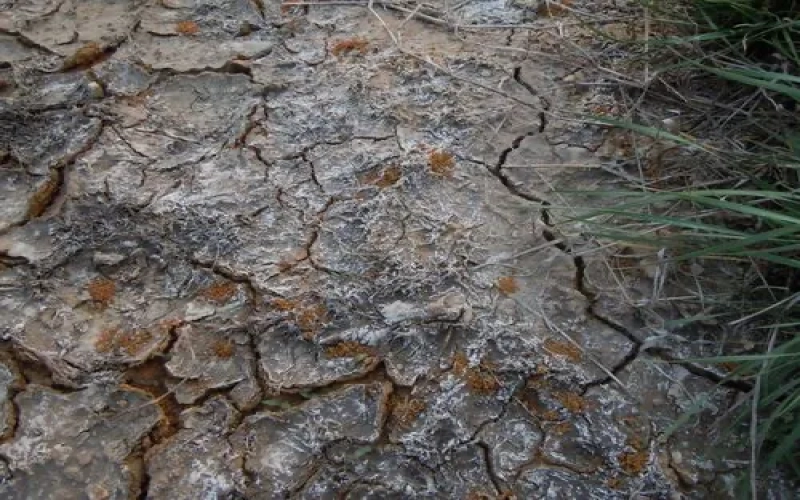
El Niño Triggers Vietnam's Worst Drought in a Century, Coffee Production Decline Pushes Up Robusta Prices
Affected by El Niño, Vietnam is experiencing its worst drought in nearly a century, and agriculture in the Mekong Delta has been hit hard. As a major global coffee-producing region, Vietnam's robusta coffee is in its flowering season but faces a water shortage crisis, and spot prices have soared to more than double those of the same period last year. At the same time, the planting boom in high-return fruits such as durian and dragon fruit is further squeezing coffee-growing areas. This article will review the specific impact of the drought on Vietnam's coffee industry, current price trends, and the latest progress on China's emergency water replenishment from the Lancang River at Vietnam's request. Friends who like Vietnamese coffee may want to follow Front Street Coffee's upcoming product updates. [more…]
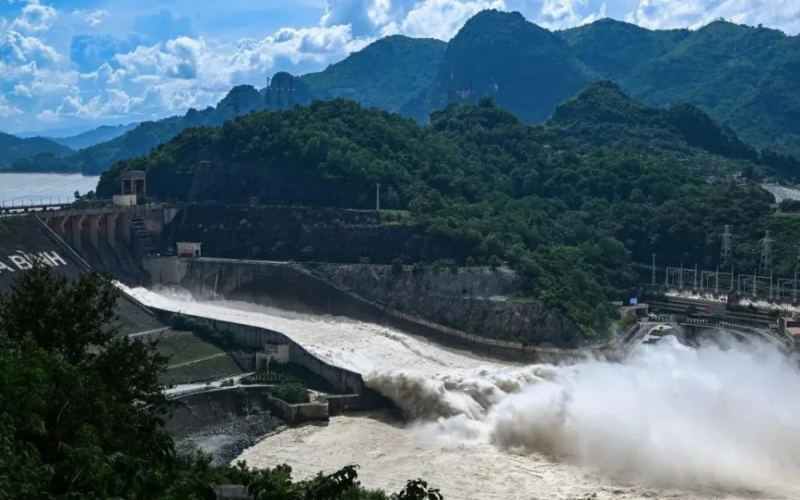
Mekong River floods combined with drought-driven production cuts: Vietnamese Robusta coffee prices may remain elevated into early 2025
Vietnam, as a major global robusta coffee-producing region, has recently faced a succession of extreme weather challenges. Two consecutive tropical storms brought heavy rainfall, causing rapid flooding in the upper reaches of the Mekong River and threatening coffee cultivation in low-lying downstream production areas. At the same time, drought earlier in the year has already adversely affected coffee flowering, making a decline in the new crop season almost certain. Some coffee farmers have switched to more profitable crops such as durian, further reducing the area devoted to coffee cultivation. Port facilities have been damaged and exports hindered, and combined with Indonesia's reduced export capacity, global robusta supply is expected to face a shortage for the fourth consecutive year. Front Street Coffee will continue to follow developments in the production regions and bring enthusiasts the latest news. [more…]
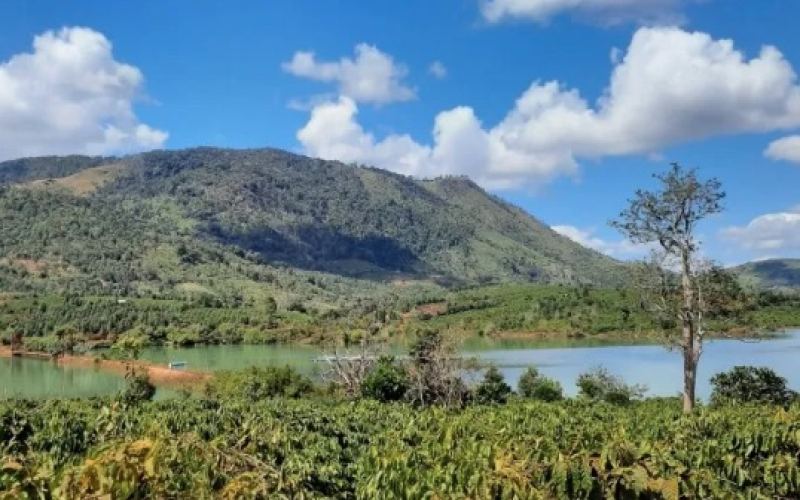
Introduction to coffee varieties in the coffee-producing areas of Vietnam.
Vietnam | Introduction to the planting environment of coffee producing areas and coffee varieties. In Asia, there are many coffee-producing countries, such as Laos, Indonesia, Timor-Leste, China, and Vietnam, among which Vietnam is the world's second [more…]
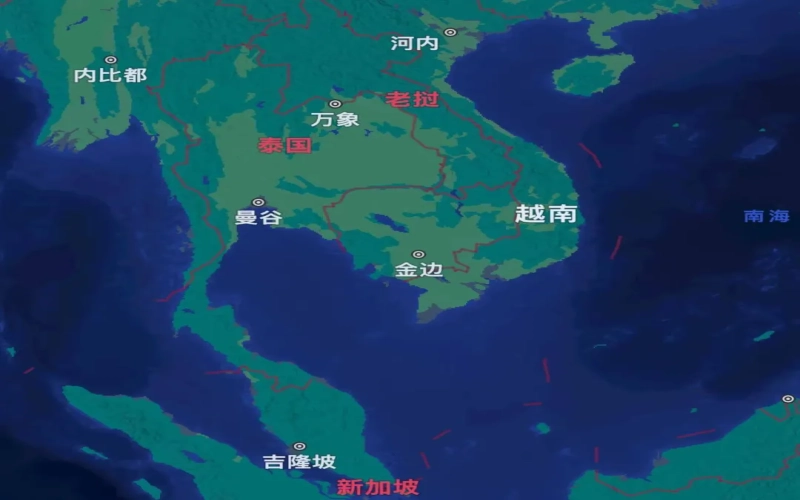
A Comprehensive Analysis of Vietnam's Coffee Regions: Growing Conditions, Variety Distribution, and Grading System
Vietnam is the world's second-largest coffee producer, renowned for its Robusta beans. With its unique tropical monsoon climate and long, narrow S-shaped terrain, this Southeast Asian country has nurtured three distinctive coffee regions: the Central Highlands, the South, and the North. The Central Highlands alone accounts for about 70% of the nation's Robusta output, while the high-altitude areas of the North sporadically cultivate Arabica varieties such as Bourbon and Catimor. Front Street Coffee takes you on a deeper look into Vietnam's coffee-growing environment, variety distribution, and grading standards, unveiling the terroir secrets behind this coffee powerhouse. [more…]
Overview of Laos's Coffee Industry: Varieties Cultivated and Production Regions on the Bolaven Plateau
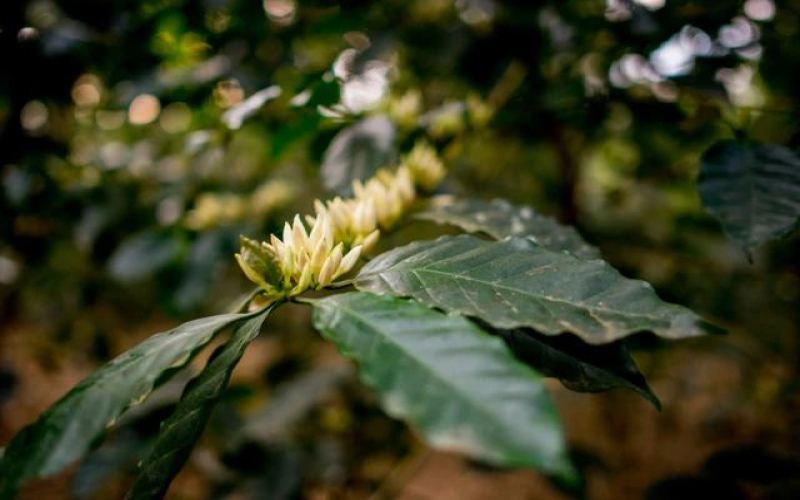
In the Asian coffee landscape, Indonesia's Mandheling and Vietnam's massive output often dominate the conversation, while Laos, a landlocked country in Indochina, is frequently overlooked. In fact, Laos possesses exceptional natural conditions—high-altitude plateaus, abundant rainfall, and volcanic soil—and coffee cultivation began there as early as the French colonial period. Today, the Bolaven Plateau accounts for about 95% of the country's coffee production, with Robusta as the dominant variety and Arabica making up roughly one-third. This article will guide you through the historical development, geographical advantages, growing regions, and current state of the coffee industry in Laos, along with recommendation information from Front Street Coffee. [more…]
An Inland Gem of the Indochinese Peninsula: The Complete Story of Lao Coffee from Colonial Introduction to Modern Production Regions
In the Asian coffee landscape, Indonesia's Mandheling and Vietnam's massive output often dominate the conversation, while the coffee story of landlocked Laos is rarely mentioned. This country, bordering China, Vietnam, and Thailand, nurtures a mild and smooth coffee flavor thanks to the high altitude, abundant rainfall, and volcanic soil of the Bolaven Plateau. From the introduction of Typica and Bourbon during the French colonial period, to the shift toward Robusta after war and disease, and now to a diverse landscape where Arabica accounts for one-third, Lao coffee has weathered a century of ups and downs. This article will walk you through the historical trajectory, core production regions, and current state of the Lao coffee industry, along with relevant recommendations from the Front Street brand. [more…]
Vietnam's coffee-growing regions hit with level-2 drought warning, robusta output drop may continue to push up international coffee prices
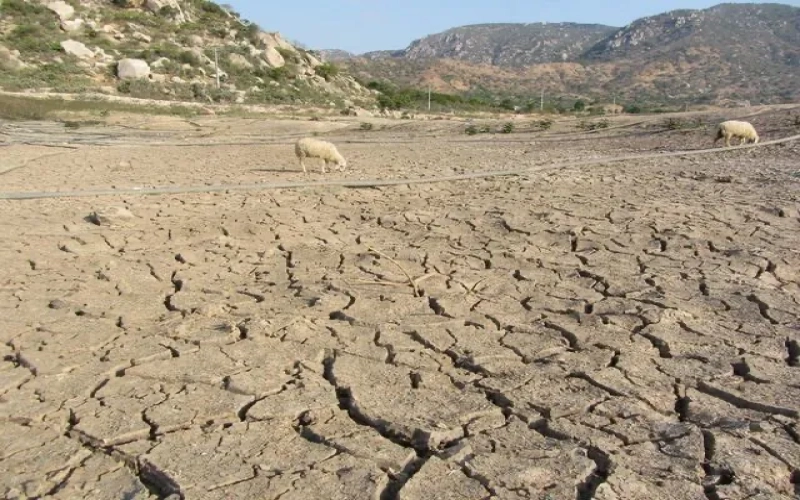
Recently, prices for both Arabica and Robusta coffee in the international market have been on the rise. The main driver behind this is that Vietnam, the world's second-largest coffee producer, is experiencing a severe drought, causing Robusta coffee output to decline and global inventories to tighten accordingly. Vietnam's National Center for Hydro-Meteorological Forecasting has issued a level-2 drought warning for five provinces—Quang Tri, Quang Ngai, Binh Thuan, Phu Yen, and Gia Lai—and warned of possible natural disasters. Rainfall in the central and Central Highlands regions has been significantly lower than in previous years during the same period, with water levels in many rivers dropping to historic lows. The Mekong River's water level has even broken its lowest record since 1926. The combination of drought and salinization has caused coffee trees in the flowering stage to wither and develop yellow leaves, and output in some producing areas may drop by as much as 30% to 50%. Local coffee purchase prices have soared to 120 million Vietnamese dong per ton, an annual increase of 250%, putting pressure on traders' cash flows. This article will review the development of the drought, production forecasts, and price trends, and also examine how brands such as Front Street Coffee are responding amid raw material fluctuations. [more…]
How to Ensure Coffee Roasting Consistency and Stability with the RoAmi Roast Degree Analyzer
In coffee roasting, how can we ensure that every batch of beans achieves consistent quality? In addition to relying on cupping to evaluate flavor, we also use the RoAmi roast degree analyzer to record the Agtron caramelization value of the coffee beans, and retain historical data for reference. The RoAmi is essentially a colorimeter, with SCAA's Agtron algorithm embedded inside, capable of calculating the roast value by reading the color data of the bean surface or ground surface. This article will introduce how to use this instrument, the meaning of the Agtron value, and how to calculate the Roast Delta value from the bean color value and ground color value, and interpret the guiding significance of this value for roasting rhythm and flavor performance. [more…]
Laos Coffee: The Hidden Producing Region of Indochina and the Cultivation Potential of the Bolaven Plateau
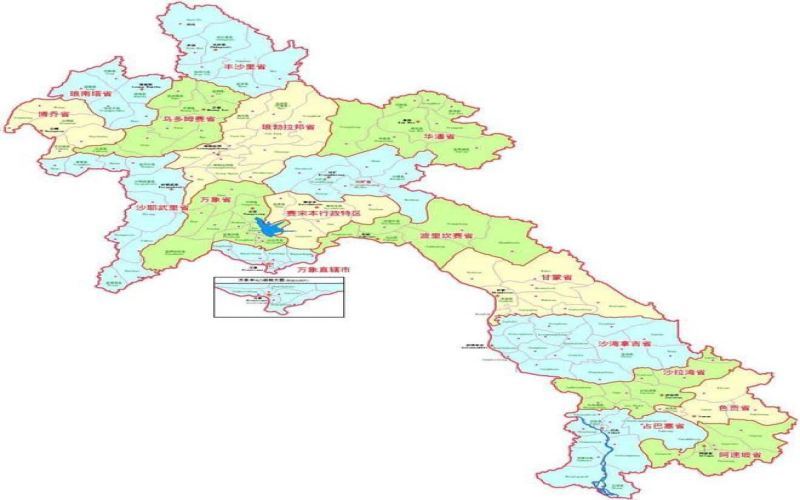
When mentioning Asian coffee, most people first think of Indonesia's Mandheling or Vietnam's massive output, while Laos, an inland country on the Indochinese Peninsula, is often overlooked. Laos has high altitudes, mineral-rich volcanic soil, and abundant rainfall, making it a natural treasure for coffee cultivation. Its coffee history dates back to the French colonial period, and after weathering wars and policy upheavals, it has gradually revived in recent years. Currently, 95% of Laos's coffee beans come from the Bolaven Plateau, with Arabica accounting for one-third of production, mainly exported to Vietnam, Thailand, and China. Laotian coffee is primarily grown by small family farmers, with a mild, smooth flavor and moderate acidity, and Front Street Coffee has also noticed the unique potential of this producing region. [more…]
Vitasoy's half-year net profit plunges 95%, recovery in the mainland market expected to take three years after boycott wave
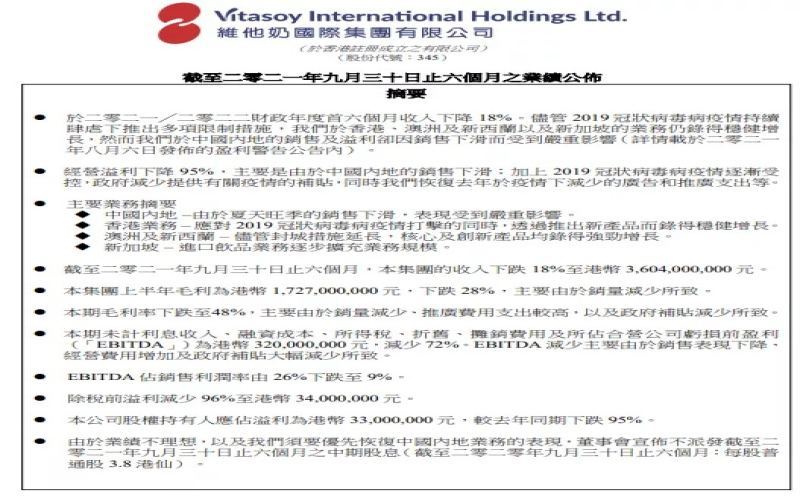
Vitasoy International Holdings' interim results for the 2021/2022 fiscal year show that revenue fell 18.28% year-on-year, while net profit plunged 95%, marking the largest decline in recent years. The core trigger of this storm was the public backlash caused by the July 2021 incident in which an employee attacked police and then hanged himself, leading to large-scale product removals and celebrity contract terminations in the mainland market—a key region accounting for 60% of the company's total revenue. The incident occurred during the summer sales peak, obstructing new product promotion, while competitors seized the opportunity to accelerate penetration. Industry analysts pointed out that in addition to the public relations crisis, Vitasoy's structural weaknesses in the mainland market—over-reliance on the Pearl River Delta and insufficient penetration in the north—were equally fatal. Rising raw material costs and slow packaging updates further dragged down recovery, and it is expected to take at least three years to restore profitability. This article will sort out the sequence of events, market reactions, and future challenges, providing in-depth reference for observers in the coffee and beverage industry. [more…]

HEYTEA's sub-brand Xixiaocha closes all stores: two-and-a-half-year journey ends, and the affordable tea beverage sector shifts
Heytea's sub-brand Xixiaocha recently closed its last store located in Guangzhou City Investment Building. From the opening of its first store in April 2020 to its complete withdrawal now, only two and a half years have passed. Xixiaocha once deeply cultivated six cities in the Pearl River Delta and opened 22 stores, focusing on affordable drinks priced from 8 to 16 yuan. Before closing, most stores were still profitable. At the same time, Heytea's main brand has continuously lowered prices since the beginning of this year, announcing that it will no longer launch products priced above 29 yuan, and all new products will be priced no higher than 20 yuan. The product positioning and price ranges of the two brands are increasingly overlapping. The last update on Xixiaocha's official WeChat public account remained on July 20, 2022, and its mini-program can no longer be searched. Heytea has not yet responded. This article reviews the rise and fall of Xixiaocha and analyzes its connection with the strategic adjustments of the main brand. [more…]
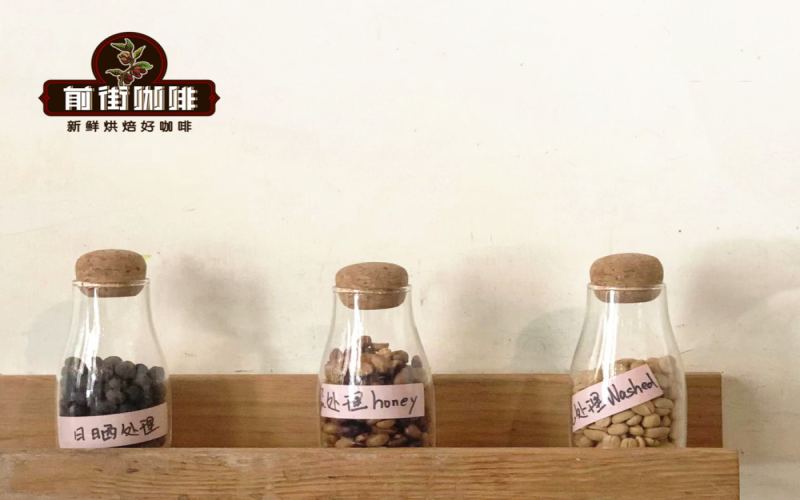
An Analysis of the Differences Among Black Honey, Red Honey, and Yellow Honey Processing: A Comprehensive Comparison from Pectin Retention to Flavor Expression
In the field of coffee post-processing, honey processing is an important method that falls between washed and natural, and is widely used in Central American producing regions such as Costa Rica. Depending on the proportion of mucilage retained, the drying time, and the frequency of turning, honey processing can be further divided into several tiers, including black honey, red honey, and yellow honey. Using three beans—black honey, red honey, and yellow honey—as samples, this article conducts a systematic comparison from green bean appearance and roasting curves to cupping flavors, helping coffee enthusiasts understand the practical impact of different honey processing methods on the final flavor direction, while also providing a reference for everyday purchasing and brewing. [more…]

Hacienda La Esmeralda Geisha Grading Guide: What Exactly Is the Difference Between Red Label, Green Label, and Blue Label?
New-crop Geisha coffee beans are arriving one after another. Front Street Coffee recently compared the differences between Geisha Village's Gold Label, Red Label, and CHAKA. This time, we turn our attention to Panama's Hacienda La Esmeralda and discuss how its three grades—Red Label, Green Label, and Blue Label—are actually divided. Since Hacienda La Esmeralda rose to fame at the 2004 Panama Cup of Excellence, it has become a benchmark in the specialty coffee world thanks to the Geisha variety. Based on altitude, cup performance, and batch source, the estate divides its Geisha beans into auction-level Red Label, reserve-level Green Label, and select-level Blue Label. The three differ in flavor profile, processing method, and purchasing channels, and Front Street Coffee has also conducted separate pour-over comparisons for each. If you are choosing a Hacienda La Esmeralda Geisha, this summary may help you clarify your thinking. [more…]
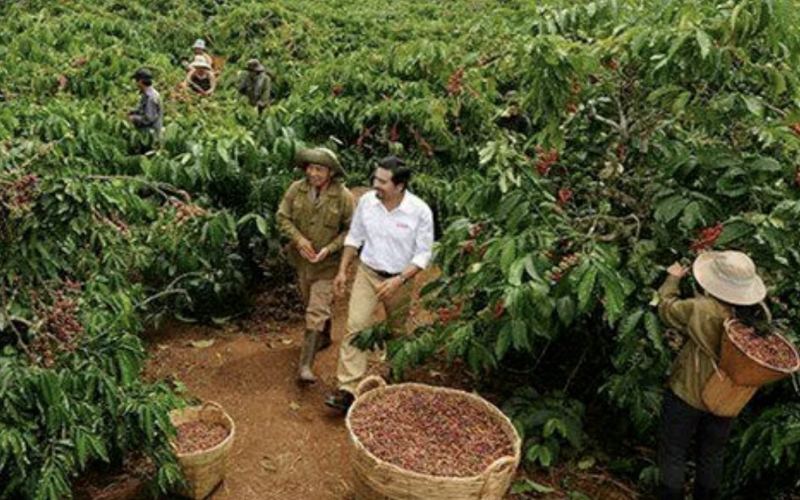
Climate impact: Vietnam Robusta will reduce production by 20%.
As the world's largest Robusta coffee producer, Vietnam's recent decline in coffee production has led to a more than 50% increase in the London Robusta coffee futures price in the past year. At the same time, the coffee purchase price in Vietnam is a [more…]
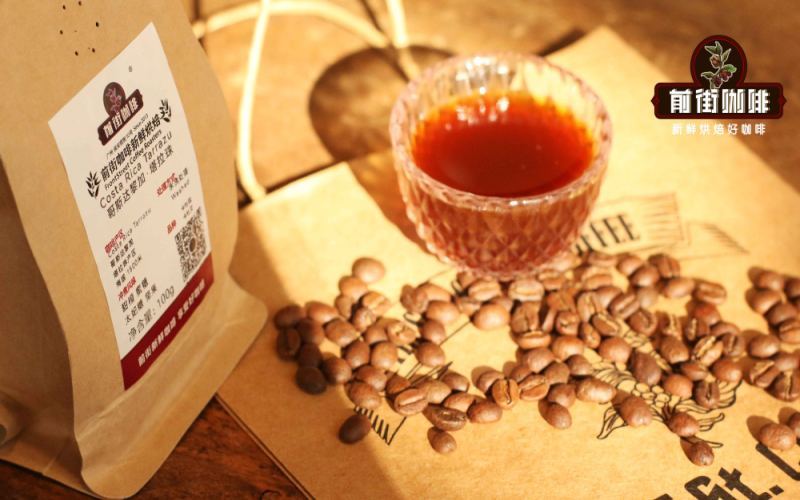
Comparison of Sun-Dried Coffee from Costa Rica's Three Major Regions: Analyzing the Flavor Differences Between Tarrazú, the Western Valley, and the Central Valley
Front Street Coffee has previously compared the differences among coffees from various Kenyan regions using the same processing method; this time, we turn our attention to Costa Rica. Also using natural processing, how much will the flavors differ among coffees from three major regions—Tarrazú, the Western Valley, and the Central Valley? This article will compare three beans—from the Pirong Processing Plant, Genesis, and Black Soul—one by one, from bean background, green bean appearance, and roasting curves to cupping and pour-over performance. If you haven't yet tried Costa Rican specialty coffee, you might start with the classic Front Street Tarrazú washed Caturra and savor its soft aroma of sweet orange, nuts, and chocolate. [more…]

Major adjustment to Starbucks Rewards points rules: the number of stars needed to redeem a free coffee will increase.
Starbucks plans to make major adjustments to its Starbucks Rewards membership program in February 2023, with the redemption thresholds for most items set to rise, while only a few iced drinks will require fewer stars. This change has sparked widespread discussion among consumers, while Starbucks says the move is intended to maintain the long-term sustainability of the Rewards program. As one of the most successful membership programs in the world, Starbucks Rewards has a huge and active user base, and changes to its points rules touch the nerves of many coffee lovers. This article will sort out the details of the adjustment, member reactions, and the brand's official response, and review the program's development history and recent innovative attempts. [more…]
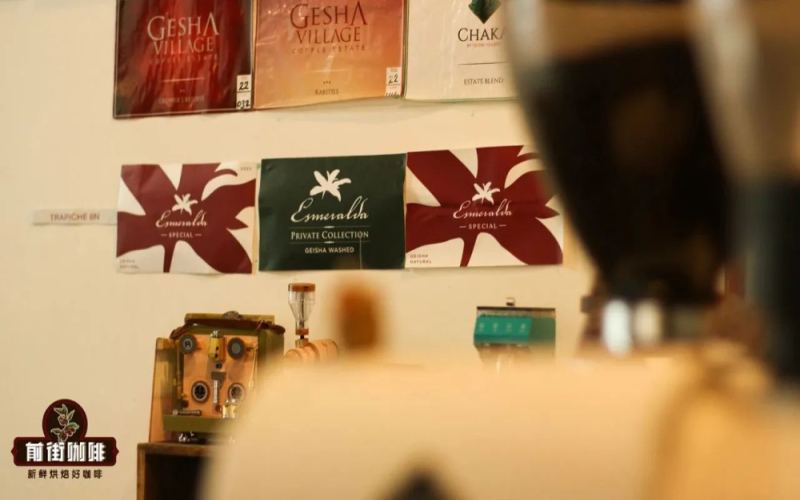
Comparison of Two Geisha Blends: Green Bean, Roasting, and Flavor Differences Between Front Street Coffee's Gesha Village Chaka and Front Street Coffee's Panama Butterfly
Front Street Coffee has recently added several Gesha Village lots, including Gold Label, Red Label, and Chaka. Many coffee enthusiasts are curious: both being Gesha blends, what exactly is the difference between Front Street Coffee Gesha Village · Chaka and Front Street Coffee Panama · Butterfly? This article compares the two across three dimensions: green bean information, roasting curves, and brewing parameters and flavor performance. Both beans are primarily Gesha variety, and both flavor profiles carry citrus fruit notes, but Chaka has higher body with prominent nutty flavors, while Butterfly is cleaner and clearer with obvious floral notes. If you are choosing a Gesha blend, this comparison may help you find the one that suits you better. [more…]

How to brew Yunnan Old Tree Dianhong for the best flavor? Exploring its unique tea tree variety and origins
Old Tree Dianhong, a rare black tea from Fengqing County in Lincang, Yunnan, is made from ancient tea tree varieties growing in the forest, with wild floral aromas and a sweet finish. Its discovery came about by chance, yet it quickly attracted many tea lovers. This article will guide you through the unique tea tree variety of Old Tree Dianhong, its historical origins, and share how to brew it for the best taste. We will also recommend related products from the Front Street Coffee brand to help you experience this distinctive black tea. [more…]
Panama Janson Geisha vs. Bolivia Java: A Full Analysis of Variety Origins, Processing Methods, and Flavor Differences
Geisha and Java—one is famed for its floral and fruity aromas, the other is called Geisha's cousin. What exactly sets them apart? Front Street Coffee recently got hold of a Bolivian Java, and took this opportunity to conduct a comprehensive comparison with a Panama Janson Estate Geisha. This article will dissect the similarities and differences between these two natural-process beans, from variety origins, green bean appearance, and roasting curves to cupping and pour-over flavors. Java first originated in the forests of Ethiopia, spread to Indonesia via Yemen, and later made its way to Central and South America; Geisha, on the other hand, set out from the Geisha forest in Ethiopia and ultimately rose to prominence at Hacienda La Esmeralda in Panama. Through actual brewing and tasting, Front Street found that the Janson Geisha has a cleaner mouthfeel, while the Bolivian Java boasts rich layers—each has its own strengths. [more…]
Vietnamese Robusta Coffee Hit by Production Crisis, Purchase Price Breaks the 100 Million Vietnamese Dong Mark
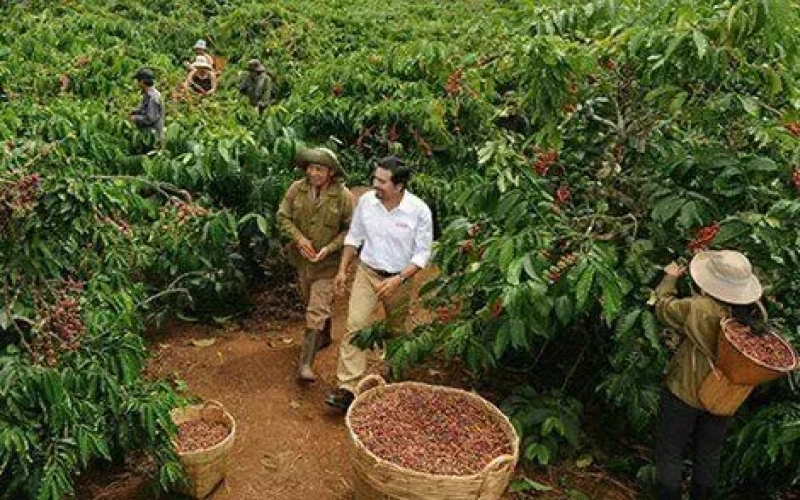
Vietnam, the world's largest robusta coffee-producing country, is facing severe challenges—drought and scant rainfall, farmers switching to fruit crops, and the lingering effects of El Niño. The combination of these multiple factors is expected to cause coffee output to fall by 20%. At the same time, Vietnam's domestic coffee purchase price has soared to 103 million to 107 million Vietnamese dong per ton, and London futures prices have risen by more than 50% within a year. This wave of reduced production not only affects Vietnam's local economy, but will also tighten the global coffee supply landscape. This article examines the climate, economic, and geopolitical factors behind Vietnam's coffee production decline, and also looks at China's role in this shifting situation. (Front Street Coffee continues to follow developments in global coffee-producing regions.) [more…]